What Is Data Science and Who are Data Scientists?

Per Wikipedia, Data Science is the extraction of knowledge from large volumes of data that are structured or unstructured, which is a continuation of the field data mining and predictive analytics, also known as knowledge discovery and data mining (KDD).

Does anyone know  a “data scientist”? Data scientists work with large data sets, analysis models, and technological solutions to help businesses drive more data-driven decisions. This is known as data science. Data scientists should have these six skill sets:

Tech Skills

  • Programmer
  • Statistician
  • Domain SME

People Skills

  • Artist
  • Client Facing
  • Communicator

As you can imagine, it is very difficult to find people who have expertise in all 6 skills sets.

DMAI Diagram_shemac101_081015 copy

The unique blend of skills required for a role on a data science team is being debated and almost everyone around the globe who is associated with Big Data, Analytics and Visualization has opinion on this topic.

DMAI has determined that the best lineup for our clients in the Philippines is a veteran business analyast, a big data analyst and a data modeling expert.

Ask me how you can get a data science team set up in your business.

DMAI Data Science Team Member #1: The Business Analyst

“We know that one of the first things lead business analysts need to do is to uncover the real issue, problem or business need. And then make sure that whatever requirements or ideas are suggested align with the thing we were trying to address in the first place” – The Business Alchemist

The first person to be recruited for the DMAI Data Science Team will most likely be a business analyst.

Some of they key personality traits for the DMAI BA include understanding how to use data to tell stories that elicit action. The BA has to be a great communicator who also understands data architecture and big data. Experience working in the BPO industry is a plus.

Data exploration and data visualization are the two most important responsibilities associated with the role of a business analyst. Business analysts work with front-end tools like Tableau as related to the core business and interact with the higher management of an organization. They further analyze business-level data provided by the data modeling analyst to find out insights related to the organization’s core business interests.

Another important responsibility of a business analyst is to coordinate with the big data analyst and the data modeling analyst to make them understand the business objectives and identify possible focus areas. The ultimate responsibility of a business analyst is to produce actionable insights based on the processed data and help the company leadership in their decision making process.

GROW

Ideal business analyst candidates should have expert level knowledge on the underlying business data and source systems. The ideal candidate should have an eye for details and must possess exceptional analytical skills. Moreover, solid understanding of the organization’s business model and the ability to think out of the box are two important qualities that all business analysts should definitely have. It is also important to have sufficient technical skills to come up with precise dashboards using Tableau for representing business data in a structured manner.

The DMAI Data Science Team works with businesses and schools in the Philippines to build data science teams, empower data science cultures and become magnets for analytics talent.

Calling All Analysts! It’s Time To Step Up And Do More With Your Skills. Join The DMAI Data Science Team.

The DMAI Data Science Team

The DMAI Data Science Team is being assembled to offer companies and schools with the training and consulting they need to implement analytics strategies in their organizations.

Headed by analytics guru Daniel Meyer, this team of analytics professionals with diversified skill-sets will guide organizations as they build analytics teams, design analytics programs and empower the use of analytics to drive more data-driven decisions.

For your data science project to be on the right track, you need to ensure that the team has skilled professionals capable of playing three essential roles – Big Data Analyst, Data Modeling Analyst and a seasoned Business Analyst. The presence of these three types of analytics professionals, working together for a common goal, will result in proper analysis of relevant information for predicting the behavior of consumers, in line with the business objective.

522

With this end goal in mind, we are looking for three super analysts to join our team and fill each of the components. Here are the roles:

Big Data Analyst:

The role of big data analyst is at the base of the pyramid. Data analysts constitute the foundation of a data science project and they are trusted with the responsibility of capturing, storing and processing the relevant data. Data Collection, Data Warehousing, Data Transformation and Data Analysis – these are typical tasks of a data analyst.

They are the professionals who play with the tools and frameworks, like Hadoop or HBase, in a distributed environment to ensure that all the raw data points are captured and processed correctly. The processed data is then handed over to the next group of people, the machine learning experts, for taking it further.

Ideal Candidate for the Big Data Analyst role: A Big Data Analyst is predominantly a technical role. The ideal candidate does not need to be very academic but must possess technical competency on the back-end frameworks and tools used for capturing the data points. If you are pro with Hadoop, MapReduce or HBase, then the role of a data analyst would perfectly match your profile. Besides technical acumen, analytical skills are also required to become a successful data analyst. A data analyst should be flexible to learn new tools according to the changing business needs and always be willing to upgrade to specialized techniques related to data analysis.

Component 2 – Data Modeling Analyst

Analytics modeling experts play the role of a link between the data analyst and the business analysts. They are primarily responsible for building data models and developing algorithms to draw conclusive information. Their job is to ensure that the derived information is well researched, accurate, easy to understand and unbiased.

Ideal Candidate for the Data Modeling Analyst role: Candidates with statistical background, having a deep interest in quantitative topics, and are usually preferred for the role of machine learning experts. The ideal professional must have a solid understanding of data algorithms and data structures in specific, and software engineering concepts in general. Knowledge and experience with both predictive and prescriptive analytics is a plus. Capability of handling computational complexity can be considered as an added bonus.

Component 3 – Business Analyst:

Data exploration and data visualization are the two most important responsibilities associated with the role of a business analyst. Business analysts work with front-end tools related to the core business and interact with the higher management of an organization. They further analyze business-level data provided by the data modeling analyst to find out insights related to the organization’s core business interests.

Another important responsibility of a business analyst is to coordinate with the big data analyst and the data modeling analyst to make them understand the business objectives and identify possible focus areas. The ultimate responsibility of a business analyst is to produce actionable insights based on the processed data and help the company leadership in their decision making process.

Ideal Candidate for the Business Analyst role: Business analysts should have expert level knowledge on the underlying business data and source systems. The ideal candidate should have an eye for details and must possess exceptional analytical skills. Moreover, solid understanding of the organization’s business model and the ability to think out of the box are two important qualities that all business analysts should definitely have. It is also important to have sufficient technical skills to come up with precise dashboards for representing business data in a structured manner. Experience with Tableau a plus.

If you are interested in any of these roles with DMAI, please email me directly @ danmeyer@dmaiph.com

Compensation packages will be negotiated based on experience and availability. A part-time arrangement is possible for a pre-defined time period as we build out the capabilities in the team. Potential ownership in a spin-off of DMAI is also a possible form of compensation.

The primary job functions of the team will be related to consulting and training organizations on areas of expertise as well as working together on analytics projects for clients.

Our end goal is to come into an organization and empower those in the organization to address needs in their analytics usage and to grow more competent analytics teams. We will do this for both companies using analytics and schools teaching people to be analysts.

It All Starts With A Business Question…

A Business Question is any type of question that is asked to help understand the business better.

Business Questions are generally asked by executives and senior leaders to help them make more educated decisions.

Often middle management and professional staff are required to provide the answer to the question.

There is no bad question.

However, there are many bad ways to try to answer the question.

Good analysts are able to take the question and find data to answer the question, analyze the results and report their findings.

This is true with just about any kind of analysis work.

Learning how to best tackle business questions is what DMAI specializes in.

We have several upcoming events where I will be showing people how to answer business questions using the data they have in and around there business.

  • August 4 – Recruitment Analytics @ the DMAI  office in Ortigas
  • August 6 – Fundamentals of Business Analytics with Inspire @ the Richmond Hotel in Ortigas
  • August 11 – Data Analytics  @ the DMAI  office in Ortigas
  • August 13 – Big Data and Social Media Analytics @ PNP Headquarters in QC
  • August 27 – Big Data and HR Analytics @ SMX with Ariva  
  • September 1 – Recruitment Analytics @ the DMAI  office in Ortigas
  • September 15 – Data Analytics  @ the DMAI  office in Ortigas

Lots of opportunities to hear more about analytics in the coming weeks!

10592010_10152674958362425_1982237172_n

Reinforcing Positive Behavior By Influencing Team Members

When you work with DMAIPH, you will be working with people who care because they constantly study, learn and evolve. No one wants to be stuck in a place where every day is the same and you never get a sense of what you are part of.

jobspicture2

Here’s one reason why Going DMAIPH is different!

https://en.wikipedia.org/?title=B._F._Skinner#Behaviorism

Been thinking a lot about how to motivate people. Sometimes I think we might have it all wrong.

We get so busy doing things that we forget to say thanks and we avoid saying you can do better.

Per Wikipedia, “Reinforcement, a key concept of behaviorism, is the primary process that shapes and controls behavior, and occurs in two ways, “positive” and “negative”.

Both types of reinforcement strengthen behavior, or increase the probability of a behavior reoccurring; the difference is in whether the reinforcing event is something applied (positive reinforcement) or something removed or avoided (negative reinforcement). Punishment is the application of an aversive stimulus/event (positive punishment or punishment by contingent stimulation) or the removal of a desirable stimulus (negative punishment or punishment by contingent withdrawal).

So I know that is nosebleed inducing for some of you, so let’s break it down.

Say we have a challenge in our business with attendance. So we can try to find ways to reinforce good behavior using positives like perfect attendance rewards or offering additional incentives to come to work like food and allowances. But we also have to find ways to limit the negative behavior through coaching, warnings and potentially termination.

If you dont have a clearly defined model of rewarding both positive and negative behavior then team members will get lost and generally gravitate towards negative behavior. Having a clear and consistent attendance policy that is upheld from top to the bottom in an organization will give you that balance of behavior.

DMAIPH specializes in helping businesses in both the U.S. and the Philippines optimize processes and procedures including how to positively influence team member behavior.

IMG_1224

Analytics Leadership – DMAIPH specializes in arming the Data-Driven Leader with the tools and techniques they need to build and empower an analytics centric organization. Analytics leadership requires a mastery of not just analytics skill, but also of nurturing an analytics culture. We have guided thousands of Filipino professionals to become better analytics leaders. Contact DMAIPH now at analytics@dmaiph.com or connect with me directly to discuss a uniquely tailored strategy to ensure you are the top of your game when it comes to Analytics Leadership.

Dan… Stick To The Plan

Having one of those days we all have once in awhile… where you invested so much time and energy into a plan, but you feel a need to change the plan.

For some it is comes with not playing well by rules. The more rules the less freedom and the less sense of  having control.

For others it may be the plan not longer fits where their life has evolved.

And then there are some who just like changing things. Mixing them up so they don’t stagnate and get bored.

Me, I’m all three.

I often hear the term serial entrepreneur… people who start things up and when the business reaches a certain point of maturity, they move on.

Never thought that one fit me too well. Im not really the cut bait and move on, I just like adding new things to what I am already doing.

I also think a lot about my super high expectations… since it is so hard to keep up with me, just about everyone tires and slows down eventually. Its impossible to expect the average person to stick to my plan, which makes it hard for me to stick to it.

workhard

However, at this point I have built something special. The company still needs a lot of work. The business plan needs to evolve faster than it has. We need to patch some holes in the boat. But overall, DMAIPH is in a pretty good spot.

So this is one of those “Stick To The Plan, Dan” days.

Look at the data, fight off the wanderlust (at least for now) and carry on.

Change is coming soon, I crave that change and Hope is just around the corner… but not today.

Work on payroll, add something to the book, blog…

Business Strategy with Analytics – Aligning a business strategy to drive an organization forward requires a robust analytics solution. Businesses who have good analytics tend to be much more profitable and efficient then ones that do not. DMAIPH has helped dozens of companies in both the U.S. and the Philippines with adding more data analysis in their business strategy. Contact DMAIPH now at analytics@dmaiph.com or connect with me directly to find out what we can do to help you align your business strategy with analytics.

Outsourcing For Expertise Is The Way To Go

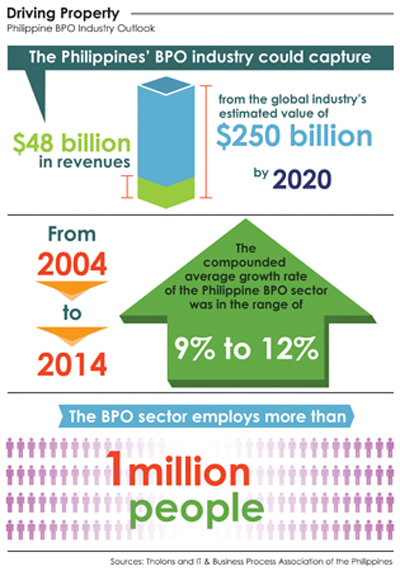
Increasingly, both large and small companies are engaging with specialized service providers as partners to their business goals. As we see in the visual below, the Philippines is still amidst a boom in this phenomena.

The continued rise in outsourcing is due to a companies’ decisions to focus more on their core strengths. In general, service providers concentrate on one or more specialized activities that the sponsor company doesn’t wish to do or doesn’t have as broad in-house capabilities to perform. We see a lot of this with our current client line-up here in DMAI.

However, in additional to taking on tasks that the sponsor companies view duties for specialty providers, it is also now becoming more of the overall business strategy to integrate both businesses rather than you the service provider as a patch.

It’s actually a long-term business model to truly partner on delivery solutions, and as a result, sponsor companies have built strong relationships with providers upon whom they can rely to contribute to their business goals in a manner that complies with both their quality and vision—yet without the need for redundant supervision.Again, this is a model DMAI has been successful at implementing with U.S. based clients.

Providers like DMAI, must be able to engage in a hunt for  talent in order to guarantee expertise and quality. They need to be able to locate the very best talent in a given region and business function in order to provide their sponsor-clients with the best-in-class service those sponsors are paying for.

This line of thinking, outsourcing for expertise is the way to go for medium sized businesses in the U.S. looking for an outsourcing solution with smaller BPOs in the Philippines.

township03-052115

Big corporations can outsource entire business lines to big BPOs. Small businesses can outsource specific functions to virtual assistants. But for medium sized companies, looking to find like minded partners, they need to be paired up with service providers who are able to both integrate into the business and find the talent to grow the business.

Analytics Outsourcing – DMAIPH has successful set up Filipino analytics teams for over a dozen U.S. based businesses. Offering both virtual and office based teams that specialize in problem solving using data, new technology and analytics techniques is our strength. Finding and empowering analytics talent is increasingly challenging, but we have it down to a science. Contact DMAIPH now at analytics@dmaiph.com or connect with me directly to learn more about how to set up an analytics-centric team in the Philippines.

Excellent Leaders Are Constantly Pursuing Excellence

https://www.linkedin.com/pulse/nature-authentic-leadership-ben-stewart

Here is an excellent conclusion to a blog post about the nature of authentic leadership…

‘Effective leadership can be an elusive goal with no clear path to direct success.  There are, however, many techniques and practices that are consistently utilized to reach this goal.  It begins with personal responsibility and leadership of oneself.  Before anyone has a chance at leading others,  he or she must take ownership of their thoughts, actions, and beliefs.

Possessing a keen insight into human behavior and thought is also critical.  This includes motivating, retaining, and resolving conflicts among the team.  It is unfortunate today that so many leaders become consumed with the ends that they forget the means.  While the bottom line is most often analyzed and how a leader is judged by superiors, it is the responsibility of the leader to ensure that the team respects its members and is passionate for pursuing excellence.  Neglecting this will bring discouragement and cause a serious threat to whatever goal is being pursued.

Leaders must always incorporate the human aspect into their decisions.  In its essence, leadership is about influence.  For a leader to maximize and improve whatever situation they encounter, requires going beyond spreadsheets and routines.  Taking a genuine interest for the team will include a common respect and appreciation for every individual.  Although this is a cumbersome and lengthy process, leadership will prove abundantly more effective.”

IMG_1849

The need for personal responsibility is most important when times are tough. If you are under pressure, its hard to lead others if your are not comfortable leading yourself.

Knowing how people think, and why they do what they do is a key point of success. Leaders who often try to spend time in their subordinates shoes are much more successful.

Pursing excellence needs to be a top motivator for any leader in DMAIPH. To be effective when it comes to working with me you need to understand the power of your influence and comprehend how it is perceived… so that you can get everyone else to follow along on that pursuit to excellence.

Analytics Leadership – DMAIPH specializes in arming the Data-Driven Leader with the tools and techniques they need to build and empower an analytics centric organization. Analytics leadership requires a mastery of not just analytics skill, but also of nurturing an analytics culture. We have guided thousands of Filipino professionals to become better analytics leaders.

Contact DMAIPH now at analytics@dmaiph.com or connect with me directly to discuss a uniquely tailored strategy to ensure you are the top of your game when it comes to Analytics Leadership.

To Strive For Operational Excellence

Analytics is key for any organization to be able to strive for operational excellence and succeed.

https://www.linkedin.com/pulse/operational-excellence-manifesto-joseph-paris

Came across this blog post on LinkedIn talking about operational excellence. The author provided 5 pieces in the flow of a continual cycle of operational excellence:

  1. Strategic Clarity – Clarify the business model and sources of competitive advantage for each business line
  2. Culture of Excellence – Instill a philosophy of relentless passion for operational improvement
  3. Advantaged Architecture & Process – Design operational architecture, processes and production system to create competitive advantage
  4. Well-Orchestrated Journey – Disaggregate journey into a sequence of digestible pieces driven by real change leaders
  5. Superior Alignment & Execution – Align organization with objectives and reinforce with superior execution

Looking at how we put these ideas into action, here is what I hope the DMAI team can do.

We can continue to look at each business line to make sure its running optimally. Often we focus our energy just on what’s broken, and rarely focus on what’s working. We lost track of the fact that just because its working, doesn’t mean it’s optimal.

We can demand more from people. Allowing mediocrity to become the norm is a sure sign we have lost our passion to improve ourselves and our business.

We can document more. We can share the documentation more. We can use the documentation as a living, evolving part of the business that will keep things innovative and forward looking.

We can set tactical goals. We can reward ourselves to celebrate these successes. And we can use these successes to springboard us to the next tactical goal as we string together success after success towards out ultimate strategic goal. Be the name brand in analytics here in the Philippines.

operational excellence

We can constantly promote, motivate and empower each other to strive towards operational excellence and never accept operational mediocrity.

We can all get behind the core values of the company, behind our strategic vision and more in unison in our never ending pursuit of operational excellence.

Analytics is the application of using data and analysis to discover patterns in data. DMAIPH specializes in empowering and enabling leaders, managers, professionals and students with a mastery of analytics fundamentals. Contact DMAIPH now at analytics@dmaiph.com or connect with me directly to find out what we can do to help you acquire the analytics mastery you and your organization need to be successful in today’s data-driven global marketplace.

The Analytics Driven Leader: Demystifying Strategy

As I prepare for spending the bulk of the upcoming year in Philippines I have several goals in mind; publish my next book, launch a new side business and spend quality time with as many of my team members as possible. And when I think of the conversations I want to have with the team, demystifying strategy and empowering more data-driven decision making are top of mind.

img_7737

Business Strategy can be a complicated thing for many reasons. First and foremost because although you can have big goals that everyone can see, the fluid nature of pushing a business forward makes it hard for many to conceptualize.

In our case we have gone from a company of 6 with one business line to a company of over 100 with six business lines in just 18 months. On top of that we have diversified from one legal entity with one purpose to three legal entities with complimentary purposes. It’s a lot to take in.

Data-Driven Decision Making can be challenging for mean reasons as well. First of all, few people on the team have a solid foundation in business analytics. Most come from companies where they either didn’t have a direct role in developing the analytics or where in companies that really didn’t value analytics. So it takes some time for people to get on board with the idea of using both data and wisdom to make decisions.

There are so many things that we can do to improve performance, enhance communication and enable more proactive thinking. Refining process flows, building better reports and having more forums for information sharing are all places to start.

My goal is by the end of the 1st quarter of 2017 we have accomplished a lot of these things. By then we will have taken some of the mystery out of our business strategy and empowered more people to look at the data as they make decisions.

Analytics Leadership – DMAIPH specializes in arming the Data-Driven Leader with the tools and techniques they need to build and empower an analytics centric organization. Analytics leadership requires a mastery of not just analytics skill, but also of nurturing an analytics culture. We have guided thousands of Filipino professionals to become better analytics leaders. Contact DMAIPH now at analytics@dmaiph.com or connect with me directly to discuss a uniquely tailored strategy to ensure you are the top of your game when it comes to Analytics Leadership.