Learn How to Turn Your Data Into Insightful and Actionable Analysis

Data Analytics Seminar

February 21,2017

9:00am- 5:00pm

Discovery Suites, ADB Drive, Ortigas Center

Objectives

  •  We will start with a basic overview of analytics, current trends in the field and how analytics is being used here in the Philippines.
  • Through a couple of hands on exercises, we will practice finding data, analyzing it and reporting our findings.
  • We will go in depth understand several key components of analytics including business intelligence, competitive landscaping, data visualization and business dashboards.
  • We conclude the day by taking an assessment of each of our own business and starting to develop strategies to enhance the analytics culture in our business.
  • Learn more about Big Data and Data Warehousing

Key Topics

  1. What is Data Analytics?
  2. Overview of Data Analytics in the Philippines
  3. Self- assessment of your own Analytics
  4. Finding Data, Mining and Presenting Data
  5. Internet Research Tips
  6. Management Reporting
  7. Reporting Using Excel
  8. Big Data and Data Warehousing
  9. Discussion about Descriptive, Predictive and Prescriptive Analytics
  10. Business Intelligence and Business Dashboards
  11. Using Data Analytics to Drive Decisions

At the end of this course you will learn:

  • How to do public data mining
  • How to provide data for Business Intelligence
  • How to build better reports in Excel
  • How to manage data for a business dashboard

Requirements: At least basic knowledge of Microsoft Excel

Who should attend?

People who make countless decisions every day!

  • Managers
  • Supervisors
    • Business Owners / Leaders
  • Team Leads
    • Accountants
    • Analysts
    • Students Enrolled In Related Courses of Study
  • Human Resources and Recruiting

This innovative and one of a kind workshop will provide you with easy to implement strategies to increase your effectiveness in decision- making.

While most people have an idea of what analytics is: data, analysis, metrics, and business intelligence are just the start… it is an abstract concept that is difficult to summarize in a sentence or two. Most business leaders know that they need more analytics based decision making in their operations, however few have figured out how to obtain it as analytics software or engaging high priced consultants doesn’t suffice.

This is where we come in. Daniel Meyer spent 15 years as an analyst with Wells Fargo Bank in the US, has combined that practical experience with his educational background; has a master’s degree in education, and developed an innovative training approach to analytics. DMAIPH specializes in a variety of analytics training solutions including ones designed for call center managers, recruiters, HR professionals, fresh grads, and analysts.

Learning Investment  IMG_7203

Exclusive Offer!! 

P 5,800.00 + VAT

This offer includes:

An Analytics Book especially designed for Filipino Professional

(Pay the full amount on or before January 20, 2017)

Group Rate (Minimum of 5)

P5,400.00

 Regular Rate: 

P 6,600.00 + Vat

(starting January 21, 2017)

All rates includes: Training Modules, AM/PM Snacks, Lunch and Certificate of Completion.

Registration 

Kindly email us your Name, Company, Job Title and Phone Number. With the Subject: Data Analytics Seminar 

info@sonicanalytics.com | analytics@dmaiph.com

You may contact us at (0917)799-2827 | (02) 959-8017

Terms and Conditions

  1. Seminar Registration shall be carried out via Sonic Analytics’ Website or the link provided by Sonic Analytics or DMAIPH, by entering the necessary information into the relevant online application form.
  2. After registration, the following will be e-mailed to the registrants: A) Confirmation email; and  B) the Invoice
  3. Contract for the seminar shall be deemed to be completed upon the receipt of the confirmation email. If a registrant’s application cannot be accepted due to lack of vacancies or for any other reasons, he/she will be informed immediately
  4. Cancellation by the delegate will be subject to cancellation charges as follows: More than 15 days prior to commencement of the course: No penalty.6 to 14 days prior to commencement of the course: 25% of course fee.5 days  prior to commencement of the course: 100% of course fee.Failure to attend course without prior notice being given: 100% of course fee.

Sonic Analytics and DMAIPH reserves the right to cancel or reschedule a Public Course and in these situations every effort will be made to accommodate delegates on an alternative course or refund payment in full.

  • Payment of the full course fee is required within 7 days of receipt of invoice. Failed to do so, the reservation shall be forfeited
  • The course fee covers training, venue, training materials, am/pm snacks, lunch and certificate of completion.
  • All stated fees are exclusive of VAT

Mode of Payment

  • DMAI accepts Cash and Cheque only
  • You may deposit the amount on our BPI Account:
  • Account Name: DMAIPH DATA ANALYTICS
  • Account Number: 3553-3662-74

About the Speaker 

Daniel Meyer

Analytics Expert and Author

-President and Founder of DMAIPH and Sonic Analytics

-15 years of experience in the banking industry.

-Masters’ in Education

-5 years college teaching experience

-Published an Analytics Book titled “Putting Your Data to Work”

Having spent 15 years as an analyst in Wells Fargo Bank, Mr. Meyer gets analytics. With the combination of his practical experience and his educational background; Mr. Meyer has developed a unique and innovative training approach to analytics.

P600.00+ Shipping Fee

Putting Your Data to Work by Mr. Daniel Meyer is designed to be an analytics guidebook for the Filipino Professional. The primary aim of the book is to acquaint everyday professionals with a working knowledge of the key concepts of analytics. Whether you are an analyst, do analysis in your job or manage someone who does analysis, this book will help you get started with using more data in your decision-making.

To avail the book or get a free short version of the book, kindly email us your details:

Name, Company, Job Title, Full Address (for shipping) and Phone Number

For inquiries please call us at (02) 959-8017 and (0917) 799-2827

analytics@dmaiph.com | info@sonicanalytics.com

Testimonials 

“I really learned a lot especially in terms of how to maximize the wealth of talent-related information that we have in PMFTC. I am pleased to inform you that I am downloading tableau as i type this message. I am also currently outlining a report that i want to present to my boss by Monday. I am also thinking about ways to improve our team’s regular reporting to HR Managers, being that none of the HR Business Partners seems to read the weekly report that we publish. I am looking at making it more like an infographic rather than just a collection of pivot tables that it is today. I can go on and on about the things that i want do to with everything I learned today. Thanks again for today’s learning-filled session.”

-Patricia

PMFTC

“The training was informative. Learning the fundamentals of recruitment analytics will really help me in providing quality work to the team”

-Raine

Convergys

“Dan’s pretty good. Can’t wait to do something more practical in forms of the application of training lessons.”

-George

Accenture

15442108_1022250554587054_3902952314714042475_n

Analytics Training – DMAIPH offers a wide range of analytics centric training solutions for professionals and students via public, in-house, on-site, and academic settings. We tailor each training event to meet the unique needs of the audience. If you need empowerment and skills enhancement to optimize the use of analytics in your organization, we are here to help. Contact DMAIPH now at analytics@dmaiph.com or connect with me directly to set up a free consultation on which of our DMAIPH analytics training solutions is best for you.
Analytics for the Small Business Owner

Do you know a small business owner who could use a little help in making their business more profitable and efficient?

I am looking for a half dozen small businesses that I can help then better understand their business data.  In exchange for my help I would like to use them as a case study in a new book I am working on.

The new book will be an Analytics Guidebook for Small Business Owners. I have found that while analytics has great success in boosting efficiency and increasing profit in large and medium sized businesses across the U.S., the same has not happened for most small business owners.

13920727_10154471484642425_3148729421440288448_n

So, I am hoping you can refer me to a small business owner you know that might be interested in some help. The kind of help I offer would be to do a simple business intelligence package for them consisting of building a competitor landscape, compiling a demographic profile and collecting customer insights. There are things I specialized in while with Wells Fargo.

In exchange for this package, I would just ask for some access to their data. How they manage expenses, payroll, inventory, and other data rich business processes. I would sign a non-disclosure agreement and not ask for access to any private information, just some raw data to work with.

I am happy to elaborate more, if you know someone who is interested. Thanks for your time and consideration.

Daniel Meyer, Analytics Champion

www.dmaiph.com

Small Business Analytics – The field of small business analytics is just starting to blossom as companies are looking for more data-driven decision-making to prosper in the age of Big Data. DMAIPH is at the fore front of providing analytics training, consulting and outsourcing options to small businesses. Contact DMAIPH now at analytics@dmaiph.com or connect with me directly to set up a free consultation on how to get more analytics in your small business.


Why Analytics Projects Fail – #5: Organizational Politics

One of the biggest hindrances to the success of analytics projects is something most of us have experienced, organizational politics.

Organizational politics are informal, unofficial, and sometimes behind-the-scenes efforts to sell ideas, influence an organization, increase power, or achieve other targeted objectives. This is what happens when you find yourself being thrown under the bus… taken a fall for someone else’s mistake.

If you are lucky to have escaped organization politics for the most part and wondering just how they can lead to the downfall of an analytics project, let me share with you an idea what that looks like.

Data is horded. People don’t like sharing because its not encouraged or rewarded. In some cases people can be outright mean about it. Keeping data that they know can have a positive impact for others just to hold power over someone. It’s nasty.

This generally comes because senior leaders don’t really see the big picture and don’t share much themselves. This trickles down to the ones with the data and they build castle walls around their information and act as gatekeepers.

Print

Projects can also be hindered, stalled or killed for no reason other than your boss lost to another boss. I once had a million dollar analytics project shelved because my boss got in trouble with the big boss. Nothing to do with me or my project or its cost or its benefits, it was completely because of something out my control.

When asking around you might hear of an experience like this as well. People hoard, manipulate and/or alter data not because it is being rewarded or encouraged, but because they are afraid being caught red-handed. A good analyst has to be willing to  report the good with the bad.

One area of organizational politics you can control though is your likability. I make the comment a lot, that you have to be likeable to be an effective analyst. If people like you they share data with you, they advocate for analytics, they support you in a multitude of ways.

If they don’t like you, then its gonna be hard to be seen as an asset to the organization. An analysts job is to educate, illuminate, and inspire… you can’t do that with a bad reputation. This is a lesson many of us have to learn the hard way, but once we learn it we can see opportunities to increase our likability factor and actively use them to push our projects forward.

So the outcome of an analytics project you are working with is in jeopardy if you are in an organization rife with office politics. SO short of updating your resume, what can you do to turn the boat around?

Here are 3 things I suggest:

  1. Get buy in from the top. Make sure what you do feeds its way up the food chain. Make sure the top dog’s analytics needs are being met and if they are not show how they can be.
  2. Use your data to show win-wins. Find examples of where if we combined data from one source with data from another source you would have the makings of something even greater.
  3. Buy lunch for the ones hording the data. Extend the olive brand, multiple times if need be. If you don’t stating being the catalyst for data sharing, who will?

If you can start impacting some of the negative consequences of your organization’s internal politics then your analytics projects will start seeding positive change. And that will eventually make all the difference in your success or failure.

If you need help combating some of the office politics in your organization that are hindering you analytics projects, connect with me and we will figure it out.

img_7737

Analytics Culture – The key to using analytics in a business is like a secret sauce that fuels Data-Driven Decison-Making. It is a unique combination of analytics talent, technology and technique that are brought together to enrich and empower an organization.

A successful analytics culture is not easy to create, but DMAIPH can show you how. Contact DMAIPH now at analytics@dmaiph.com or connect with me directly so we can build a strategic plan to turn your company into analytics driven success story.

Data-Driven Cultures

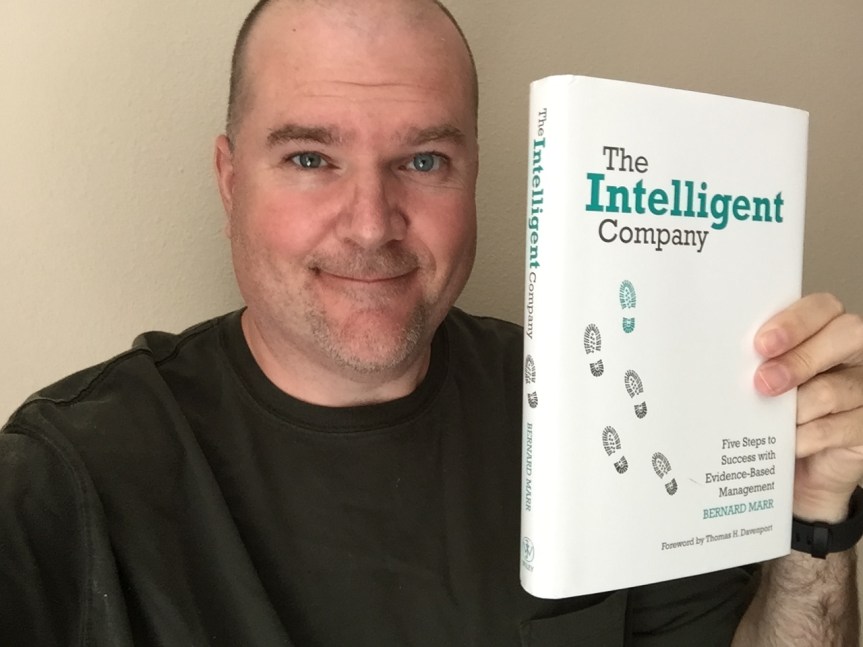
Inspired in part by Bernard Marr’s 2010 book, The Intelligent Company, my goal these past several years has been to build and/or be part of data-driven business cultures.

In his book, Bernard advocates for using Evidence-Based Management, that is using the best available data to inform decision-makers. In parallel to this, I have been empowering companies and professionals to empower decision-makers to use more data as well. I call it data-driven decision-making, but at their cores, they are very similar approaches to managing success.

Over the next several blog posts I will share my thoughts on the steps Bernard published. I will be giving my own spin towards more analytics and data-science, two things that I think have accelerated in importance since the book went to print six years ago.

The cornerstone of the book is the five steps to more intelligent decision-making, which are:

  • Step 1. More intelligent strategies – by identifying strategic priorities and agreeing your real information needs
  • Step 2. More intelligent data – by creating relevant and meaningful performance indicators and qualitative management information linked back to your strategic information needs
  • Step 3. More intelligent insights – by using good evidence to test and prove ideas and by analyzing the data to gain robust and reliable insights
  • Step 4. More intelligent communication – by creating informative and engaging management information packs and dashboards that provide the essential information, packaged in an easy-to-read way
  • Step 5. More intelligent decision-making – by fostering an evidence-based culture of turning information into actionable knowledge and real decisions.

13177172_10154260751837425_2167903280431899505_n

As information and data volumes grow at explosive rates, the challenges of managing this information is turning into a losing battle for most companies. In the end they find themselves drowning in data while thirsting for insights. Combine this with an increasingly severe shortage of talent with analytics, data visualization and good communication skills, things look bleak for companies not adhering to lessons like those suggested in the Intelligent Company.

I get this stuff. In response to a quickening demand for knowledge and know how, I have developed training materials to address these decision-making challenges. The reason I founded DMAI in the first place was to empower more data-driven Decision-Making through the use of Analytics and business Intelligence. I’m happy to help you enable better decision-making in your business and turn it into an Intelligent Company.

Analytics Culture – The key to using analytics in a business is like a secret sauce. It is a unique combination of analytics talent, technology and technique that are brought together to enrich and empower an organization. A successful analytics culture is not easy to create, but DMAIPH can show you how. Contact DMAIPH now at analytics@dmaiph.com or connect with me directly so we can build a strategic plan to turn your company into analytics driven success story.

DMAIPH Helps Companies Revitalize Their Business (2 of 3)

The second type of company we have helped successfully is  one looking to revitalize. Profits are down, customer flow has shrunk, product and services aren’t selling like they used too. We can offer our business intelligence package of customer insights, demographic profiling, competitive landscaping and market assessment. We can also offer virtual staffing support to assist with marketing, scheduling and follow-up.

I’d like to share a story about one of our clients who came to us at a crossroads with his business. This client is a chiropractor who was trying to figure out what to do with his business. Having lost 40% of his patient base and seen his revenue drop by 60%. He was at a cross road. He had tried a couple of consultants, spent lots of money and was still heading the wrong direction.

In talking with him, it was clear he had lost touch with his market and was not able to offer a very compelling solution to bring new clients in. We suggested we do a series of business intelligence exercises to help understand more about his business, the opportunity around him and come up with some potential solutions.

3.6.1

Because he didn’t have a lot of money to waste, we suggested using a team of interns to help keep costs down. It would be a great analytics exercise for the doctor’s practice and for the eager young minds we had been working with.

We dove into the project and came up with the following resources; we built a competitive landscape, constructed a demographic profile and put together a customer insights report. Each one using public data, analysis done by the interns with my guidance and direction, and used Tableau to roll all the data and findings into a dashboard to show the doctor how he’d gotten to the point he was currently at.

After identifying some action items based on our assessment, we then helped the doctor but some into practice and helped him turn his business around successfully.

By employing very curious minds, giving them direction on where to find data and how to analyze it and sharing the data with an open-minded end user, we successfully validated my approach to using analytics to help a small business.  We have done the same for a half dozen other small businesses and can do the same for yours.

big_data_analytics

Analytics Consulting – As a founding member of Gloabl Chamber Manila, DMAIPH specializes in a variety of analytics consulting solutions designed to empower analysts, managers and leaders with the tools needed for more data-driven decision-making.

We have helped dozens of companies get more analytics in their business. Contact DMAIPH now at analytics@dmaiph.com or connect with me directly so we can tailor an analytics solution made just for your unique requirements.

DMAIPH’s Typical Client Profile

I publish and share a lot of content about helping businesses get a better handle on their analytics in order to build a culture of data-driven decision-making. With so many businesses of various shapes and sizes looking to get more out of their data, I get asked a lot what kinds of businesses do we specialize in helping.

In general, I think we can help just about any business with its data analytics, with using data for business decision-making and in building an analytics centric culture.

That said, success often will hinge on a couple of factors.

  1. How is the data acquired and stored? The more structured the data management the easier.
  2. How serious is top level management about using data to make decisions?
  3. Is there a person or a team who really get the theory of how to optimize a business using data?

If all of those are true, it’s a green light for us no matter what the size or type of business.

If 1-2 are true, it is still possible, but we will have to make sure we keep expectation tied to reality.

If none of factors are in place, then I will probably decline the consulting gig. You can save people who don’t really want to save themselves.

Our business plan is to offer analytics solutions in the things we are best at, (1) talking about analytics, (2) consulting on using data in a business strategy and (3) providing data and/or analytics focused, hybrid staffing solutions.

The 3 kinds of businesses we specialize in helping by offering these solutions are

  1. Ready to expand – companies who are about to kick off a period of significant growth in their operations and need data analytics and/or more staff to be successful.
  2. Ready to revitalize – companies who have hit a rough patch and need to better understand where things went wrong and need a road map on how to get back on track.
  3. Ready to launch – start up companies who need to refine their initial business plan based on solid data analysis and/or need staffing solutions to get things rolling.

jobspicture2

So although I feel we can help just about any business when it comes to analytics, these are the 3 types of service we offer to our target market. I will detail more about how we go about helping businesses and tell you a story about a company we have helped in the next few blog posts.

Analytics Consulting – As a founding member of Gloabl Chamber Manila, DMAIPH specializes in a variety of analytics consulting solutions designed to empower analysts, managers and leaders with the tools needed for more data-driven decision-making. We have helped dozens of companies get more analytics in their business. Contact DMAIPH now at analytics@dmaiph.com or connect with me directly so we can tailor an analytics solution made just for your unique requirements.

Q13: A lot of us want to know what is business intelligence and how does it add value to analytics?

Per Wikipedia, Business Intelligence (BI) is an umbrella term that refers to a variety of software applications used to analyze an organization’s raw data.

BI as a discipline is made up of several related activities, including data mining, online analytical processing, querying and reporting. BI can be used to support a wide range of business decisions ranging from operational to strategic as well as both basic operating decisions include product positioning or pricing and strategic business decisions include priorities, goals and directions at the broadest level.

The CHED memo breaks business intelligence into four phases:

  1. Data Gathering. Business analysts need to identify the appropriate data-gathering technique by conducting research. Once you have identified the right data, it needs to be captured. This process is the same as the identify process.
  2. Data Storing. A general term for archiving data in electromagnetic or other forms for use by a computer or device. There is a common distinction between forms of physical data storage is between random access memory (RAM) and associated formats, and secondary data storage on external drives. This process is akin to the first part of the inventory process.
  3. Data Analysis. The process of systematically applying statistical and/or logical techniques to describe and illustrate, condense and recap, and evaluate data is the analysis phase. Data analysis has multiple facets and approaches, encompassing diverse techniques under a variety of names. We need to have a data analysis to improve the company’s performance. This process is the 2nd half of the inventory process.
  4. Data Access. Data Access refers to software and activities related to storing, retrieving, or acting on data housed in a database or other repository. Two fundamental types of data access exist: sequential access (as in magnetic tape, for example) Data access crucially involves authorization to access different data repositories. Data access can help distinguish the abilities of administrators and users.

That is a good starting point to understanding the concept. The memo breaks down the data analysis process into 4 parts to show how important the structure or data lake your data is stored is as important as the data itself.

Business Intelligence tools all work based on the premise that you have structured data neatly stored in tables with header rows and columns of data. More advanced BI tools can handle unstructured data, but for the most part they are all built to pull data from structured environments. BI Tools are like a fish or depth finder to help you access your data from the data lake quicker and with more efficiency.

Another important point to note is that business intelligence and business analytics are sometimes used interchangeably, but there are different.

From my perspective, the term business intelligence refers to collecting business data to find information primarily through asking questions, reporting, and online analytical processes.

Business analytics, on the other hand, uses statistical and quantitative tools for explanatory and predictive modeling. In this definition, business analytics can be seen as the subset of an enterprise wide BI strategy focusing on statistics, prediction, and optimization. The CHED memo is more closely aligned to that division as well as the primary focus is on the storage of data and the use of modeling.

As for myself, I worked with business intelligence software and methodologies with Wells Fargo long before I had even heard of the term BI.

3.6.1

I want to leave you with on tip. If you are fairly new to the concept of business intelligence tools I suggest you download Tableau Public. It is very easy to learn, there is a very active user community to learn from and best of all it’s free.

So check it out.

What is Business Intelligence?

Here is a excerpt from the upcoming textbook, Fundamentals of Business Analytics….

What is Business Intelligence?

Per Wikipedia, Business Intelligence (BI) is an umbrella term that refers to a variety of software applications used to analyze an organization’s raw data.

BI as a discipline is made up of several related activities, including data mining, online analytical processing, querying and reporting. BI can be used to support a wide range of business decisions ranging from operational to strategic as well as both basic operating decisions include product positioning or pricing and strategic business decisions include priorities, goals and directions at the broadest level.

The CHED memo breaks business intelligence into four phases:

  1. Data Gathering. Business analysts need to identify the appropriate data-gathering technique by conducting research. Once you have identified the right data, it needs to be captured. This process is the same as the identify process.
  2. Data Storing. A general term for archiving data in electromagnetic or other forms for use by a computer or device. There is a common distinction between forms of physical data storage is between random access memory (RAM) and associated formats, and secondary data storage on external drives. This process is akin to the first part of the inventory process.
  3. Data Analysis. The process of systematically applying statistical and/or logical techniques to describe and illustrate, condense and recap, and evaluate data is the analysis phase. Data analysis has multiple facets and approaches, encompassing diverse techniques under a variety of names. We need to have a data analysis to improve the company’s performance. This process is the 2nd half of the inventory process.
  4. Data Access. Data Access refers to software and activities related to storing, retrieving, or acting on data housed in a database or other repository. Two fundamental types of data access exist: sequential access (as in magnetic tape, for example) Data access crucially involves authorization to access different data repositories. Data access can help distinguish the abilities of administrators and users     For example, administrators may have the ability to remove, edit and add data, while general users may not even have “read” rights if they lack access to particular information. This phase is the equivalent of the integrate process.

It is important to note that business intelligence and business analytics are sometimes used interchangeably, but there are different.

From my perspective, the term business intelligence refers to collecting business data to find information primarily through asking questions, reporting, and online analytical processes.

Business analytics, on the other hand, uses statistical and quantitative tools for explanatory and predictive modeling. In this definition, business analytics can be seen as the subset of an enterprise wide BI strategy focusing on statistics, prediction, and optimization. The CHED memo is more closely aligned to that division as well as the primary focus is on the storage of data and the use of modeling.

As for myself, I worked with business intelligence software and methodologies with Wells Fargo long before I had even heard of the term BI. But for most of you reading this, that is ancient history. 🙂

2.0.5

Social Intelligence Is A Competitive Advantage

Just came across a Tableau white paper and one of the top 10 business intelligence trends they talk about is how Social Intelligence is increasingly becoming a distinct competitive advantage.

tableau logo

“In 2014 we saw organizations begin to analyze social data in earnest. In 2015, the leading edge will start to take advantage of their capabilities. Tracking conversations at scale via social will let companies find out when a topic is starting to trend and what their customers are talking about. Social analytics will open the door to responsive product optimization.”

Per Wikipedia, “Social intelligence is the capacity to effectively negotiate complex social relationships and environments…[ it is social intelligence, rather than quantitative intelligence, that defines humans… social intelligence is an aggregated measure of self- and social-awareness, evolved social beliefs and attitudes, and a capacity and appetite to manage complex social change.”

So what is the social intelligence of your business? Are you managers and decision-makers looking at data to help them understand the social intelligence of your business? How do you measure social intelligence and start calibrating data?

These questions are exactly the kinds of things DMAI can help you with.

Optimize Your Business and Competitive Intelligence With More Data-Driven Decision-Making

Here is a Training Proposal I just submitted. I hope it gets approved as it will be a fun class to teach.

Title: Optimize Your Business and Competitive Intelligence With More Data-Driven Decision-Making

Length: 8 hours in a 1 day session

Facilitator: Daniel Meyer, President of DMAI and Inspire Analytics Expert with over 15 years of experience with Business and Competitive Intelligence experience. Served as top BI and CI Analyst for Remittances at Wells Fargo Bank for seven years.

Main Focus: Customized program on Business and Competitive Intelligence (i.e. identifying BD opportunities which includes effective market monitoring, and competitive analysis).

Through a variety of lecture, discussion and group exercise, participants will be empowered to maximize the data around them to deliver industry leading research and analysis.

Topic Areas Include:
• Overview of Business and Competitive Intelligence Concepts
• Brining More Analytics Into Your BI and CI Process
• Finding The Right Data At The Right Time
• Building and Understanding Your Competitor Landscape
• How To Conduct More Data-Driven Competitive Analysis
• Measure the Effectiveness of Your Market Monitoring
• Using Data-Visualization To Enhance Your Reporting
• Capitalizing On Business Development Opportunities

Participants: In-house Research team who are involved in the following services: Competitive Research Reports, Industry and Environment Scanning Reports, Market Research and Strategic Reports

522