Data-Driven Leaders

Came across this blog post recently

https://analyticsweek.com/content/the-10-commandments-for-data-driven-leaders/

I love the points made here. For the sake of brevity, data-driven leaders do these 10 things:

  1. Don’t try to do it all alone.
  2. Do what you say, actions need to follow words.
  3. Analytics leadership has to come from the top. The boss has to be a user of data.
  4. Data-Driven Leaders use analytics to make sure they have a feel for the culture of their business. They have the pulse of it at their fingertips.
  5. You need to surround yourself with people who speak data. It has to be ingrained in your leaders for your leadership to work.
  6. When your data brings business problems to light, then tackle them swiftly.
  7. Always look for new data geek recruits. Find apostles.
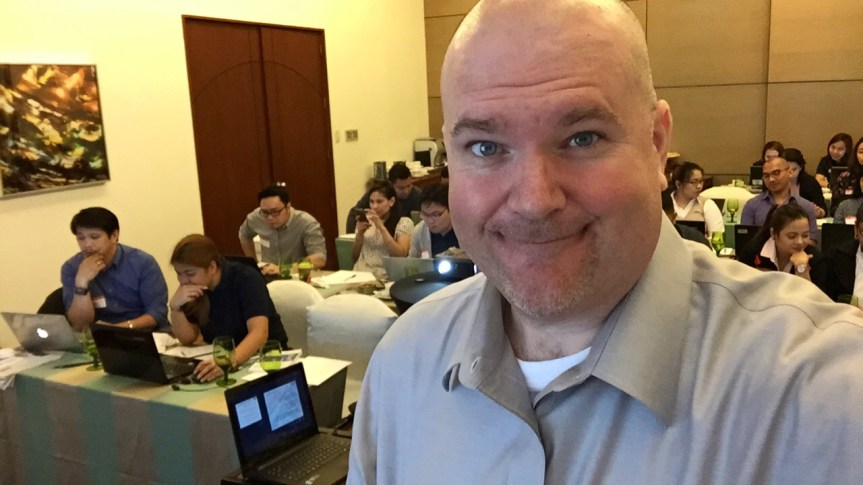
  8. Tell your story. If you are doing it right with analytics, then you need to let the world know about it. IMG_6912
  9. Constantly refresh your strategy with new data and new analysis. Dont make decisions on stale information.
  10. Always keep an eye on the long term. Balance your time and focus between tactical and strategic needs.

When you strive to do these things, you make those around you better. You will empower them to start doing the same thing and you will be well on your way to not just being a Data-Driven Leader, But running a Data-Driven Organization.

Analytics Leadership – DMAIPH specializes in arming the Data-Driven Leader with the tools and techniques they need to build and empower an analytics centric organization. Analytics leadership requires a mastery of not just analytics skill, but also of nurturing an analytics culture. We have guided thousands of Filipino professionals to become better analytics leaders. Contact DMAIPH now at analytics@dmaiph.com or connect with me directly to discuss a uniquely tailored strategy to ensure you are the top of your game when it comes to Analytics Leadership.

Analytics in the Philippines: It Either Happens in 2017 or It Might Never Happen

A few years ago the then country manager of IBM Philippines, Mariels Winhoffer, kicked off a project to help push the Philippines towards being an analytics hub for the booming growth in Big Data and the Global Analytics Talent War. That was in 2013.

With 3 factors in play; the world calls outsourcing services of the Philippines, the exponential growth of Big Data the fact that the demand for analytics talent far out weighs the supply; it makes total sense that the Philippines step up and fill the need. Now in 2017 we have not really gotten much closer.

There are some schools offering some subjects in analytics related areas, but its far from being significant enough to meet the needs.

The government has given some attention to supercharging analytics, but the current outlook is not one where we will see enough to propel us forward.

Big BPO companies who are offering analytics as a service have tried desperately to fill seats,  but have generally seen limited success.

Now it seems that most Filipino companies have gotten a grasp of the power of a good analytics team and are trying to catch up.

As 2017 begins, there has never been as much thought about Analytics in the Philippines as there is right now. However, the big question is it too little to late?

To me 2017 will be the watershed year for Analytics in the Philippines. We will either make significant progress towards being both a global hub for analytics and a significant domestic user of analytics or we will find that the opportunity was just too challenging to tackle.

I’m all in on betting on the former… lets make 2017 the year that Analytics in the Philippines became a success story.

img_7737

Analytics in the Philippines – The Philippines is at the center of the action when it comes to solutions to the global need for analytics. Blessed with a solid foundation of young, educated and English speaking workforce, companies around the world are look for Filipino analytics talent to fill analytics positions. DMAIPH was set up to facilitate these solutions and bring the talent and the business together. Contact DMAIPH now at analytics@dmaiph.com or connect with me directly so we can help you take advantage of this unique global opportunity.

Fast Data is the New Big Data

Starting to hear a new buzzword for analytics… Fast Data. Everyone knows about Big Data that is growing almost exponentially.

It is coming to us in mind boggling sizes, from all across the Internet of Things and quicker then ever before.  The traditional 3 V’s of data (volume, variety and velocity) don’t seem to be enough anymore to describe the challenges we have before us.

SO now we are looking for Fast Data solutions, which means getting the right data you need at the right time with minimal delay.

The concept of waiting for reports to be pushed to you so you can analyze them is so 20th Century.

Now its all about being fast.

I can show you a thing or two (or a dozen) about how to supercharge your analytics by moving past management repots and even past business dashboard to start looking for solutions that get data to the decision-makers without any middle man.

Big Data is now Fast Data. Don’t get left behind.

data-analytics-feb21-001

Join me this coming Feb 21 2017 for a Data Analytics Seminar in Ortigas where we talk about how to take your Big Data and make it your Fast Data.

DMAIPH specializes in arming the Data-Driven Leader with the tools and techniques they need to build and empower an analytics centric organization. Analytics leadership requires a mastery of not just analytics skill, but also of nurturing an analytics culture. We have guided thousands of Filipino professionals to become better analytics leaders.

To that end, DMAIPH offers a wide range of analytics centric training solutions for professionals and students via public, in-house, on-site, and academic settings. We tailor each training event to meet the unique needs of the audience. If you need empowerment and skills enhancement to optimize the use of analytics in your organization, we are here to help.

Contact DMAIPH now at analytics@dmaiph.com or connect with me directly to set up a free consultation on which of our DMAIPH analytics training solutions is best for you.

Key Analytics Tip – Build A Data Map

One of the keys to being successful with analytics is having a clear view of how all the data flows into and through your business.

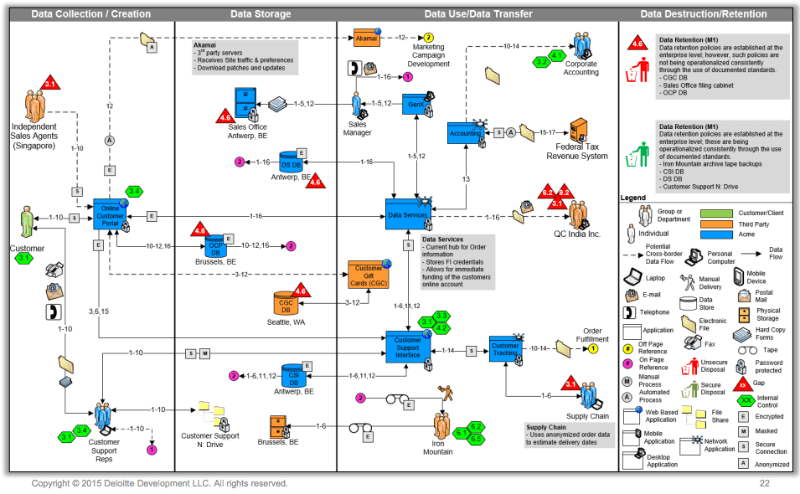
Building a data map to show all the entry points, all the places where data is stored, who and how it is  accessed  and what filters might change your data is one of the things I can help you do.

This is step one towards data integration and is a great exercise for a half day in-house training/seminar for any business or organization that is struggling to get valued out of it’s big data.

Per Wikipedia… Data integration involves combining data residing in different sources and providing users with a unified view of these data. Data integration appears with increasing frequency as the volume and the need to share existing data explodes.

If you can imagine a map of your business in your mind you are half way there. The next step is to build a flow chart like the one below

datamap

If you have something like this then you are on ahead of the game.

If you don’t, let us set up some time to discuss how to get started.

Analytics Culture – The key to using analytics in a business is like a secret sauce. It is a unique combination of analytics talent, technology and technique that are brought together to enrich and empower an organization. A successful analytics culture is not easy to create, but DMAIPH can show you how. Contact DMAIPH now at analytics@dmaiph.com or connect with me directly so we can build a strategic plan to turn your company into analytics driven success story. 


In The Information Age Knowledge Truly is Power > Power Up on Feb 21

SO many companies are trying to figure out how to get more valued of their data, but most dont know where to start.

Let me show you how on February 21, 2017 @ Discovery  Suites in Ortigas (Pasig City, Metro Manila).

E mail for more information about our data analytics seminar, so you can learn to unlock that elusive knowledge buried within the data of your business. 15442108_1022250554587054_3902952314714042475_n

Analytics Culture – The key to using analytics in a business is like a secret sauce. It is a unique combination of analytics talent, technology and technique that are brought together to enrich and empower an organization. A successful analytics culture is not easy to create, but DMAIPH can show you how. Contact DMAIPH now at analytics@dmaiph.com or connect with me directly so we can build a strategic plan to turn your company into analytics driven success story.

Philippines Analytics Review – 2016

There is no doubt that analytics is now a big deal in the Philippines.

Now that 2016 is in the books, I can proudly say I spent the better part of the past year helping Filipino get more analytics in their businesses.

My primary goal for the year has been meet, so let’s recap how that happened…

My involvement in empower Filipino companies, students and professionals to make data-driven decisions has renewed my passion for being a top name brand for analytics in the Philippines.

As I think back the Recruitment Analytics training that DMAIPH and Sonic Analytics put on early in the year, I think about how HR professionals are now actively looking to get more analytics in their business.

The simple fact is there are more white collar, professional staff jobs out there then there are qualified candidates. And its only getting worse. Recruitment Analytics is the only way to stay on the cutting edge.

This was even more evident when I spoke in front of close to 100 HR professionals at a workshop called HR & Recruitment Analytics Techniques put on by my good friends at Ariva Events Management.

We spent the day talking about how get IT when it comes to recruitment. The 3 I’s of analytics; identify, inventory and integrate data as well as the 3 T’s; talent, technology and technique needed to make sense to the data.

I once again joined Ariva for their annual Philippines HR Congress. One of the central themes of the conference attended by over 1000 HR professionals was Aligning HR Strategy with Analytics.

HR teams are sitting on a gold mine of insightful data, but in most cases have not been able to take advantage of it.

Big Data Analytics has come so fast and furious, that it takes a lot of effort to become analytics champions and try and move a company culture towards more data-driven decision-making. This was top of mind for all the attendees.

At the same time I have been doing speaking and public training, CHED has been training teachers on how to teach business analytics. Their efforts to explain the Fundamentals of Business Analytics to faculty and students will go a long way in making the Philippines a significant analytics hub.

I have been honored to have helped several schools in adding my two centavos to the discussion about analytics careers for fresh grads.

Another moment of great personal pride came when I published my newest book, Putting Your Data to Work. This guidebook is designed to help Filipino professionals who aren’t too familiar with analytics, get started.

In early November, I was part of a panel discussion at the Big Data Conference at Enduran college. I was and still am super excited about the topic, The Future of Big Data Analytics in the Philippines. This is my passion, turning students and young professionals interested in analytics on to the huge opportunity they have in front of them.

A week later I conducted a Data Analytics seminar with DMAIPH and Sonic Analytics. The primary goal here was to demonstrate how having a thorough understanding of the data environment in a business can lead to huge successes.

Next up was a job fair at Trinoma mall put on by Job Quest PH. My goal here was to recruiting a few young professionals looking to get started in analytics as DMAIPH is looking for some marketing analysts.

A few days later I attended a Data Science event being set up by my good friends at Talas. This free event saw a meeting of the minds of a lot of thought leaders in data science as well as industry leaders in employing analysts and data science. Pretty exciting stuff.

The final 2016 event on my schedule was another full day training organized by my key business partner Ariva. The topic, Big Data and Business Intelligence, which proved to be a great opportunity to help people gain a stronger handle on analytics and how they can be an analytics champion in their business.

IMG_6912

2016 turned out to be my most successful year yet. Analytics in now mainstream and I love it.

Analytics in the Philippines – The Philippines is at the center of the action when it comes to solutions to the global need for analytics. Blessed with a solid foundation of young, educated and English speaking workforce, companies around the world are look for Filipino analytics talent to fill analytics positions. DMAIPH was set up to facilitate these solutions and bring the talent and the business together. Contact DMAIPH now at analytics@dmaiph.com or connect with me directly so we can help you take advantage of this unique global opportunity.


Quick Analytics Career Question

Greetings to You My Valued LinkedIn Connection,

I was talking with a young professional just getting started in his analytics career. During our conversation we discussed what is most important to being a great analyst. With that in mind, I’d ask you to share your thoughts.

In your opinion, of the following ways to learn about analytics, which one has been the most important in your career path?

  • Formal Education – A degree or certificate in an analytics related field.
  • Self-Learning – Using trial and error and online resources.
  • Subject Matter Experts – Being trained/mentored by an expert.
  • Seminars/Workshops – Attending events to acquire new knowledge.
  • Technical Training – Attend training on specific technical areas.

Thanks for sharing. As always I will roll up all the replies I get and blog about it.

Dan Meyer, Analytics Champion, http://www.dmaiph.com

img_7526

Analytics Survey – DMAIPH conducts quarterly analytics surveys to collect data on current trends in analytics. We specialize in surveys that assess analytics culture and measuring how aligned an organization is to using data and analytics  in its decision-making. Contact DMAIPH now at analytics@dmaiph.com or connect with me directly to find out more about how DMAIPH can conduct surveys to help you assess the analytics culture in your business.

Most Analysts Spend 50% of Their Time Finding Data

Most analysts spend most of their time finding data.

% Finding Analyzing Reporting
10 12% 6% 33%
20 14% 10% 39%
30 20% 31% 24%
40 6% 14% 2%
50 31% 16% 2%
60 14% 18% 0
70 0% 0% 0
80 0% 2% 0
90 0% 0 0
100 0% 0 0
       

In fact, most analysts I know spend 50% of their time finding data.

Among other thing this can mean they are setting up data mining or data gathering process to look for the data or it can mean they reviewing their data for relevancy.

My experience is that when you spending this much time on the finding the right data phase it reflects a poorly structured data environment or a unfamiliarity with the data needed.

Dirty data is also a big time waste.

Experience is the best solution for challenges with finding data. The fact the finding phase % is so high speaks to both the explosion in the 3 V’s of Big Data (Velocity, Volume and Variety)  as well as the number of analytics newbies.

To me this should be no more than 20% of your time.

I expected finding data would be the biggest chunk, but was surprised that over 50% of my analyst connections using at least 40% of their time finding data.

If you have one day to answer a key business question, this means you are using your entire morning just finding the data.

When you get back from lunch you haven’t even started the actual analysis yet and the clock is ticking.

Data is based on a survey I sent to 3,000 of my LinkedIn connections who are either analysts or work closely with data and analysis.

Analytics Survey – DMAIPH conducts quarterly analytics surveys to collect data on current trends in analytics. We specialize in surveys that assess analytics culture and measuring how aligned an organization is to using data and analytics  in its decision-making. Contact DMAIPH now at analytics@dmaiph.com or connect with me directly to find out more about how DMAIPH can conduct surveys to help you assess the analytics culture in your business.

The Analytics of Measurement and Evaluation

By taking inspiration from the way corporations use business analytics to optimize their Big Data, our Program Measurement and Evaluation processes can be greatly enhanced.

To understand the connection, let’s start with the mission of the Measurement & Evaluation program.

“The ability to effectively evaluate projects, programs and processes is becoming increasingly essential to organizational success today. American University’s online Master of Science (MS) in Measurement & Evaluation provides you with the knowledge to lead these evaluation efforts and the technical skills needed for analytically demanding roles in upper management.” 1

A good analytics solution constructs a universal framework for collecting, analyzing and utilizing data to determine project effectiveness and efficiency.

Likewise, an efficient measurement and evaluation of projects, programs and policies using analytics should ensure success. An analytics centered approach will likely work with corporate, non-profit and governmental organizations across various sectors and industries.

IMG_6912

We can look specifically to two key business analytics concepts I have used in my twenty plus years of analysis work; Key Performance Indicators (KPIs) and Data Visualization. The key to my success was my ability to answer important business questions using analytics.

Analytics is generally defined as the discovery of patterns in data that provides insight and identifies opportunities. As Carly Fiorina, former CEO of HP said about analytics, “The goal is to turn data into information, and information into insight.” 2

Organizations that invest in analytics generally make much better business decisions then one’s that don’t. In fact, IBM found that organizations who use analytics are up to 12x more efficient and 33% more profitable. 3

In the corporate world, business analytics is widely use to track, analyze and report Key Performance Indicators (KPIs).

KPIs are rolled up to senior leadership to drive business strategy, identify and mitigate risk and to optimize operational productivity.

This approach is very similar to the way projects in the Measurement and Evaluation are tracked, analyzed and reported.

So we need to ask ourselves, what are the KPIs for the project, program or process we are measuring? What points of data need to be captured, analyzed and reported to determine success?

A successful analyst is able to remove the noise when analyzing data and isolate what matters most to his or her organization. That is what is at the heart of measurement, knowing what data is important and what is not.

Once we have the right data, we can measure what the data tells us to determine success, causality, impact… whatever the outcome may be.

A quote often attributed to management guru Peter Drucker perfectly sums up why big corporations rely so heavily on analytics when he said “What gets measured, gets managed.”

Similarly, policy decisions can be made based on what is measured. Project funding can be impacted by what is measured. Process optimization can be directed by what is measured.

Once we are able to measure what is truly important to policy-makers, managers and decision-makers, we need to make sure we present the data in a compelling way.

This is where data visualization comes in.

I often make the analogy that if a picture is worth a thousand words, then a good pie chart is worth a thousand rows of data.

We all know that most people learn more by seeing something then by reading or hearing it. Data visualization takes that a step further.

Data visualization is not only important to presenting our insights but also for exploring the data for insights. Most people find it easier to process information when it is in the form of a picture then a collection of data.

Chip & Dan Heath, Authors of Made to Stick, found that, “Data are just summaries of thousands of stories – tell a few of those stories to help make the data meaningful.”

The ability to take all of the data gathered in the measurement phase and use it in the evaluation phase will make a significant difference in the success of the project, program or process you are working on.

According to the Office of Planning, Research and Evaluation, “Program evaluation is a systematic method for collecting, analyzing, and using information to answer questions about projects, policies and programs, particularly about their effectiveness and efficiency”. 5

Data Visualization can be used to paint a picture of a program, project or policy that influences outcomes based on the KPIs. And by appealing to the basic human fascination with stories, a persuasive graph, chart or infographic can make all the difference in the world.

By adopting the business analytics concepts of KPIs and Data Visualization, and applying them to the world of programs, policies and projects, you can find the same level of success I found in the corporate world.

  1. American University, “Certificate in Measurement & Evaluation” http://programs.online.american.edu/online-graduate-certificates/project-monitorin Accessed October 20, 2016
  2. Carly Fiorina Speech from December 6, 2004 http://www.hp.com/hpinfo/execteam/speeches/fiorina/04openworld.html . Accessed October 20, 2016
  3. Simon Thomas, Senior Analytics Consultant for IBM https://youtu.be/Zi8jTbXnamY . Viewed October 20, 2016
  4. Chip & Dan Heath, Authors of Made to Stick, http://heathbrothers.com. Accessed October 20, 2016
  5. OPRE, http://www.acf.hhs.gov/opre/resource/the-program-managers-guide-to-evaluation-second-edition. Accessed October 20, 2016

Analytics Education – Facilitating a mastery of the fundamentals of analytics is what DMAIPH does best. All across the world, companies are scrambling to hire analytics talent to optimize the big data they have in their businesses. We can empower students and their instructors with the knowledge they need to prepare for careers in analytics. Contact DMAIPH now at analytics@dmaiph.com or connect with me directly so we can set a guest lecturer date, On-the-Job Training experience or other analytics education solution specifically tailored to your needs.

The 10 Analytics Essentials of Entrepreneurship

A good friend of mine, Boom San Agustin, recently blogged about the essentials of entrepreneurship. Boom listed the 10 things most essential to be successful in setting up and running your own business.

This inspired me to put an analytics spin on each of the 10 points, showing how you can use data to augment each point.

  1. Have passion for what you do. One way to measure how much of your time you are devoting to your passion is to set a schedule and track how much time is devoted to everything you do each day. If you are happy with the % spent on passion projects then you are doing the right thing. But if too much of your time is spent on things you don’t like doing, then you need to make some changes.
  2. Pursue excellence first, money second. Here you need to do a lot of research and ask a lot of questions. You need a clear idea of what excellence in your chosen business looks like. How can you measure excellence with your products, your service, your team’s performance and engagement? Putting some key metics in place will allow you to make more informed decisions.
  3. Be open and honest with others and yourself. Get feedback. See what % of your client, customer, partner, team member, interactions are honest and endure honesty in others. Come up with a way to measure the trustworthiness of what you do.
  4. Have a “can-do” attitude. Keep a project list of all the things you need to accomplish. Update it every day. Be able to show yourself and others your progress towards getting things done. This will ensure that people see the work behind the words.
  5. Be the leader your team needs. Devote significant amounts of your time to your team. Keep them informed by blogging. Build tools for communication like newsletters. Be visible in person and in social media. Track the frequency of your engagements and correlate them to employee satisfaction surveys.
  6. Learn to communicate well. Get in front of an audience whenever possible. Engage the audience. Ask for feedback. Identify challenges and opportunities and then follow up. If your team doesn’t know what is going on in your head, then it is a problem. Gathering data on your communication strengths and weaknesses is key.
  7. Be a teacher and a learner. Facilitate as much on-site training as possible. Get involved in it. Train people yourself on areas you are good at. And then sit and listen to other experts in areas you are not. Track the time put into training and come up with a cost justification. Its easy to cut training when times are tough because its hard to assign a value to it. Make this a priority now so you always know the valued of training in your business.
  8. Have your ear to the ground. Stay engaged in person and on social media. Keep updated on trends affecting your business and your employees. Use a social media tool like Hootsuite to manage your social media messaging to get feedback all in one place. Lots of data points can be created and tracked to measure how close you are to the pulse of your business.
  9. Be dynamic and open to change. Set a check-in schedule. Encourage one on ones and team meetings that are not just one sided but empower sharing. If you are open minded and listen, you will be able to make changes to your business that keep things on the cutting edge. Use a timeline to show where you have been, where you are and project out where you are going.
  10. Know when to quit. We all fail. Businesses will all fail at some point. Winners know when its time to fail and walk away to do something else. Losers stay the course until they go down with the ship. Figure out what is the most important metric in your business. Sales, profit, engagement, risk potential… whatever it is. Figure out what is the lowest acceptable number, once you get close to it, be prepare and exit plan. If you pass it, face facts and pull the plug. Always have that data point at your fingertips.

If you are able to build in analytics like these, you will be able to manage your business well. You will set a tone among the leadership that uses data, not just the gut, to make decisions. One of your first hires should be a data guy who can build a business dashboard and deliver impactful reports. Someone who can help you identify risks and rewards and keep your focus on the metrics that matter most.

13920727_10154471484642425_3148729421440288448_n

Analytics Leadership – DMAIPH specializes in arming the Data-Driven Leader with the tools and techniques they need to build and empower an analytics centric organization. Analytics leadership requires a mastery of not just analytics skill, but also of nurturing an analytics culture. We have guided thousands of Filipino professionals to become better analytics leaders. Contact DMAIPH now at analytics@dmaiph.com or connect with me directly to discuss a uniquely tailored strategy to ensure you are the top of your game when it comes to Analytics Leadership.