Q4: Can you please describe the current state of analytics in the Philippines? – Part 2

So the last blog post gave us the history. Now let’s cast an eye on the future.

Over the past year or so I have started to see a significant effort from data science and analytics professionals come together to address some of the challenges outlined in my last blog post.

In short, the way higher education and the government has approached the need for analytics talent is simply to little to late to meet the needs of many businesses.

Everything they are doing helps, but in the end the world is desperately looking at the Philippines to do with analytics what it did with customer service. To become a center of capable, long-term and affordable talent.

With taking customer service calls, it was a natural fit given that most Filipino college graduates have a foundation in English. With analytics and data science it has not been so easy. While many Filipino have the underlying course work in coding, database management, computer science, etc… they are not getting enough exposure to data-driven decision making, business intelligence tools,  and more advanced things like machine learning, prescriptive analytics and blending big data from diverse data sources.

I don’t want to sound too pessimistic, things are moving quickly but it is generally the multinationals driving things forward. They have the clients, they have the need and so they go out and find people and train them. That’s why 3 years ago hardly anyone in the private sector was offering analytics training, now you see more and more options all the time. They are generally expensive and narrow in focus, but they are opening up huge opportunities for data loving Filipinos to get into upwardly mobile and financially rewarding careers.

I belong to a couple of newly founded organizations of data scientists and analysts who meet on a regular basis to share knowledge, support each other’s ideas and build a community with the goal of using data to helping both the Filipino to fill these open jobs and for the Philippines to begin to use more data in decision-making so we can solve the big issue problems important to all of us.

It’s a pretty exciting time.
10256713_275221292688289_6652823653462957603_o

So where next?

Given that the Philippines is one of the youngest countries in terms of average age on the plant and the youth are incredibly communal and very tech savvy, I have found great success in training batch of Filipino fresh graduates in basic analytics. Of the 200 or so trainees I have personally trained, most of them now have jobs with analyst in their title.

I have also seen a lot of talent quickly go from novice to expert using applications and doing coding in relatively short periods of training. In many respects the approach to analytics is more vocational then academic allowing for quicker training.

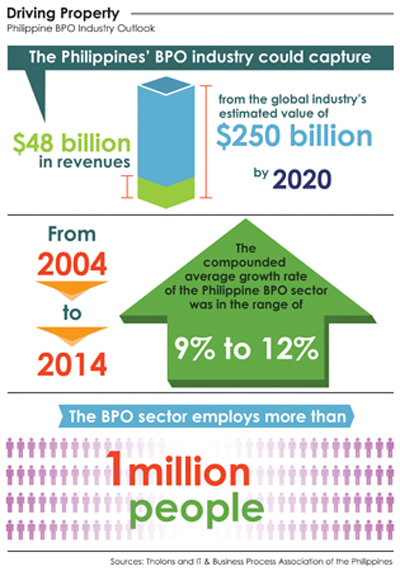
Beyond these strength, you can expect more partnerships between the government, higher education and big business to offer training and career pathing.  The success of the BPO industry is really the driving force to add employees who can do the tasks of an analyst. The huge surge in job postings demonstrates this quickening trend.

Finally, the reason I see a bright future for analysts and data scientists in the Philippines is the simple fact that Filipinos gravitate to under filled career paths, they push themselves to get the skills to fill those jobs.  You see it in the Middle East oil fields, in sailors and seamen in just about every ship at sea, you see it with overseas workers across the planet, and you saw it happen with call centers.

And that is exactly why I set up my business in the Philippines. Here are some of the analytics solutions we offer:

The Fundamental of Business Analytics – Business Analytics is the application of talent, technology and technique on business data for the purpose of extracting insights and discovering opportunities. DMAIPH specializes in empowering organizations, schools, and businesses with a mastery of the fundamentals of business analytics.

HR & Recruitment Analytics – The recruitment and retention of top talent is the biggest challenge facing just about every organization. You really have to Think Through The Box to come up with winning solutions to effectively attract, retain and manage talent in the Philippines today. DMAIPH is a leading expert in empowering HR & Recruitment teams with analytics techniques to optimize their talent acquisition and management processes.

Contact DMAIPH now at analytics@dmaiph.com or connect with me directly to learn how to get more analytics in your Business or your HR & Recruitment process so you can rise to the top in the ever quickening demand for top talent.

Q1: To start can you provide us with a basic overview of what is analytics?

Analytics is simply about looking for patterns in data to help answer questions. Most people use analytics within a business to help ensure more data-driven decision making. Businesses that use analytics are generally much more efficient and much more profitable then ones that don’t.

Analytics is generally employed by analysts who are skilled in using certain technologies and methodologies to identify, inventory and integrate large amounts of data quickly. What separates analytics from statistics and data science is generally the speed of the analysis and the focus on solving business problems.

The most common form of analytics is general business analytics that are used by senior leaders and decision-makers to investigate problems, validate assumptions and to guide strategic planning.  Business analysts are therefore the most common type of analyst. However, analytics can be used in an almost limitless number of business functions in specific areas like HR, recruitment, marketing, finance, and so on.

Analysts have been around a long time, but recent technological advances have both allowed us to produce and capture more data as well as give us the ability to analyze immense data sets quickly. Thus we are amidst a huge boom in the applications of analytics and the need for analytics talent across the globe.

Analytics is something just about every business leader is trying to figure out how to use more effectively in their business. As a result, there is a huge shortage of people who are skilled in working with data to answer questions and solve problems. This why you have seen the number of analyst job postings increasing at an amazing rate.

If you are not actively trying to surround yourself with analysts and if you are not infusing an analytics centric culture in your business, you will most likely soon see your business fail.

The Fundamental of Business Analytics – Business Analytics is the application of talent, technology and technique on business data for the purpose of extrating inights and discovering opportuniites. DMAIPH specializes in empowering organizations, schools,  and busiensses with a mastery of the fundamentals of business analytics.  Contact DMAIPH now at analytics@dmaiph.com or connect with me directly to find out how you can strengthen your business analytics fundamentals.

20 Questions with Dan Meyer about the Fundamentals of Analytics.

Recently I was asked to put together an FAQ about analytics. Based on my experiences from training people how to better use analytics, these 20 questions are the ones I most commonly get asked.

  1. To start can you provide us with a basic overview of what is analytics?
  2. Can you tell us what makes you an analytics guru?
  3. What are some of the current trends in analytics?
  4. Can you please describe the current state of analytics in the Philippines?
  5. What are some basic strategies an analyst can use to find the right data at the right time?
  6. Can you provide some tips on how to manage data?
  7. What exactly is data science and why the rapid rise of data scientists?
  8. Here something a lot of us are wondering, what exactly is big data and how can we use it?
  9. Can you please describe the concepts of storing data in a data ware house?
  10. Please talk about how, when and why we use should descriptive analytics?
  11. Can you next describe how to best use predictive analytics?
  12. Next please explain when and how we can use prescriptive analytics?
  13. A lot of us want to know what is business intelligence and how does it add value to analytics?
  14. What is data visualization and how does it help drive better decision-making?
  15. What is a business dashboard and how is it used in a business?
  16. Can you tell us more about current trends and hot new tools in social media analytics?
  17. Many of us work in recruitment or HR. What are some best practices and technologies used in HR and recruiting?
  18. Can you please talk about recent developments in higher education on how to train more analysts?
  19. How would you describe your approach to teaching analytics?
  20. So in conclusion can you explain a little more about your own method for using data to drive better decision making?

Each day for the next several days, I will take each question and elaborate and share with you my own personal FAQ on the Fundamentals of Analytics.

coverpicture1

The Fundamentals of Business Analytics – Business Analytics is the application of talent, technology and technique on business data for the purpose of extrating inights and discovering opportuniites. DMAIPH specializes in empowering organizations, schools,  and busiensses with a mastery of the fundamentals of business analytics.  Contact DMAIPH now at analytics@dmaiph.com or connect with me directly to find out how you can strengthen your business analytics fundamentals.


How to Build Your Business Strategy

Business strategy is something that comes naturally to me. I’m good at anticipating challenges, at doing research to assess the risk and reward to multiple options and I love to use data to validate or refute initial findings.

Though easy for me, I have found that being successful with business strategy is not as natural for most business owners, senior managers and decision-makers.

IMG_1849

When I set up my first company, it was based on a year of research and lots of networking. When I launched my second business it was based not just on research and networking, but learning from the mistakes made the first time with financial planning and partner relationships. Now on my third business, having taken the best of everything that worked before and finding ways to mitigate the things that went wrong before.

Now, for most business leaders you can’t just hit the rest button every few years, but you should hit the reset button on your initial strategy. Adapt to changes in the market. Glean new insights on cutting edge technology. Stay on top of industry trends.

That’s the first key to business strategy. Understanding that it is a continual process that evolves. Many businesses fail because they don’t change with the times or because leaders just stick with what has always worked. That’s dinosaur thinking.

Any good business strategy has to adopt a continuous process improvement policy, using something Six Sigma or Lean to keep things form getting stale.

A good business strategy also seeks out new technologies that can disrupt both their business and their business marketplace. What was cutting edge and trendy six months ago most likely be as effective six months from now. Good Business intelligence tools that can do cool data visualizations and build business dashboards help us stay ahead of the game. I show a lot of people how to do this using Tableau Public, which is free and easy to learn.

The next key to business strategy is integrating customer insights into everything you do. If you don’t listen to your customers, if you can’t predict what they need, and if you have a strategy that puts profit before customer experience you will probably fail.

It amazes me when I see bad customer service, products that no longer meet customer needs being produced and unimaginative marketing campaigns. In this day and age, with access to our customers at unprecedented levels, there is no excuse for failing to get it right the first time.  We do a lot of surveying and engage using social media to stay connected.

The third key I include in my business strategy planning and consulting is understanding the competitive landscape. Knowing where we stack up in the marketplace, what are our strengths and weaknesses, what is hot and what is not… you need to put as much focus on what is happening outside the business as you need to know what’s happening inside.

Almost everyone I talk with about their competitors share with me one common feeling… I don’t really know what my competitors are doing. In fact a high percentage even struggle to identify who their key competitors are. We are active in industry organizations, online social media groups and attend competitors events to stay up to date.

Business strategy is a lot more than just business intelligence, customer insights, and competitive landscapes, but it is a good start. If you are able to add these to financial models and demographic data, you will have a well-rounded business strategy. And then its just a matter of keeping it fresh, resetting it every so often to make sure you don’t become a dinosaur.

Let me know if I can help. In the past few years I have helped companies of all shapes and sizes refine their business strategy using my keys to success.

Business Strategy with Analytics – Aligning a business strategy to drive an organization forward requires a robust analytics solution. Businesses who have good analytics tend to be much more profitable and efficient then ones that do not. DMAIPH has helped dozens of companies in both the U.S. and the Philippines with adding more data analysis in their business strategy. Contact DMAIPH now at analytics@dmaiph.com or connect with me directly to find out what we can do to help you align your business strategy with analytics.

How High Is Too High? I Don’t Ever Want To Find Out

Somedays I ask myself, why am I never satisfied?

What caused me to be one always looking for ways to improve?

It can be a lonely place sometimes when you have your bar set higher then most people would even dare to reach for.

It can be a sad place when you realize you have gone as far as you can go with some people.

My life is full of instances where people just gave up on trying to follow me.

They choose a path more traveled and less difficult.

I can never do that.

Until my dying breath I will aim high.

I will not always reach that goal, but I will never have to look myself in the mirror and lie to myself about giving my best.

For giving my best is what I have always done and will always do.

I am stubborn in the belief that I can do anything and refuse to give up hope.

For those who choose to get left behind, I am sad you stopped reaching for the stars.

You settled for half way.

But not me. Never me. Its not possible for me too do what you do.

11393144_10153432064897425_1344991735431472090_n

Analytics Leadership – DMAIPH specializes in arming the Data-Driven Leader with the tools and techniques they need to build and empower an analytics centric organization. Analytics leadership requires a mastery of not just analytics skill, but also of nurturing an analytics culture. We have guided thousands of Filipino professionals to become better analytics leaders. Contact DMAIPH now at analytics@dmaiph.com or connect with me directly to discuss a uniquely tailored strategy to ensure you are the top of your game when it comes to Analytics Leadership.

Outsourcing For Expertise Is The Way To Go

Increasingly, both large and small companies are engaging with specialized service providers as partners to their business goals. As we see in the visual below, the Philippines is still amidst a boom in this phenomena.

The continued rise in outsourcing is due to a companies’ decisions to focus more on their core strengths. In general, service providers concentrate on one or more specialized activities that the sponsor company doesn’t wish to do or doesn’t have as broad in-house capabilities to perform. We see a lot of this with our current client line-up here in DMAI.

However, in additional to taking on tasks that the sponsor companies view duties for specialty providers, it is also now becoming more of the overall business strategy to integrate both businesses rather than you the service provider as a patch.

It’s actually a long-term business model to truly partner on delivery solutions, and as a result, sponsor companies have built strong relationships with providers upon whom they can rely to contribute to their business goals in a manner that complies with both their quality and vision—yet without the need for redundant supervision.Again, this is a model DMAI has been successful at implementing with U.S. based clients.

Providers like DMAI, must be able to engage in a hunt for  talent in order to guarantee expertise and quality. They need to be able to locate the very best talent in a given region and business function in order to provide their sponsor-clients with the best-in-class service those sponsors are paying for.

This line of thinking, outsourcing for expertise is the way to go for medium sized businesses in the U.S. looking for an outsourcing solution with smaller BPOs in the Philippines.

township03-052115

Big corporations can outsource entire business lines to big BPOs. Small businesses can outsource specific functions to virtual assistants. But for medium sized companies, looking to find like minded partners, they need to be paired up with service providers who are able to both integrate into the business and find the talent to grow the business.

Analytics Outsourcing – DMAIPH has successful set up Filipino analytics teams for over a dozen U.S. based businesses. Offering both virtual and office based teams that specialize in problem solving using data, new technology and analytics techniques is our strength. Finding and empowering analytics talent is increasingly challenging, but we have it down to a science. Contact DMAIPH now at analytics@dmaiph.com or connect with me directly to learn more about how to set up an analytics-centric team in the Philippines.

A Few More Thoughts On Leadership

Most of my blog posts the past few weeks have been focused on leadership.

As my company grew from 6 to almost 100 in just 18 months we were forced to make a lot of quick decisions that have not always turned out to be the best long term solutions. So now I reflect on those lessons. How to move away from making snap judgments based and move more into data-driven decision making. That’s always been the goal.

Here are so of my favorite quotes on leadership and how I plan to wrap them into my leadership meeting next week.

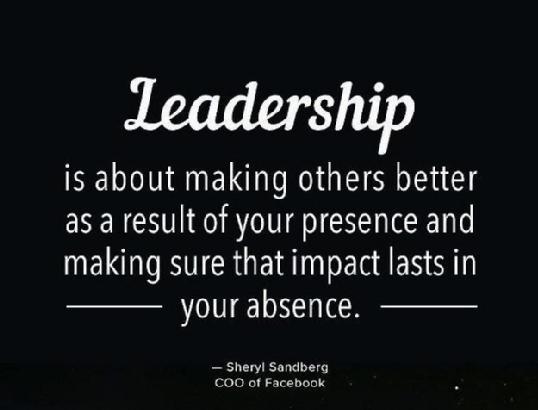
Jack Welch said that, “Before you are a leader, success is all about growing yourself. When you become a leader, success is all about growing others.” I firmly believe this and have tried hard to instill this sense of purpose in my leaders. However, we have a lot more work to do before we have an organization full of people looking out for the success of others before looking out for their own success first.

A big part of this is to constantly be pushing the organization to evolve and to never rest. Peter Drucker said that “Leadership is lifting a person’s vision to high sights, the raising of a person’s performance to a higher standard, the building of a personality beyond its normal limitations.” That’s my point exactly. We look at the data, analyze our performance and determine what to improve next.

From our recent survey, we know our team members crave feeling valued and being appreciated more than they depend on being paid well. We need to focus on this and build a recognition program that show value and share appreciation. Sam Walton once said, “Outstanding leaders go out of their way to boost the self-esteem of their personnel. If people believe in themselves, it’s amazing what they can accomplish.” For us to reach the next level of success as a company this sense of empowerment needs to permeate through the ranks.

I hate when I have to manage people because things aren’t being done they way I expect them to get done. Part of that comes from my own failures in instilling this lesson in others. “Leadership is the art of getting someone else to do something you want done because he wants to do it.”  from General Dwight Eisenhower. We do too much bossing and not enough uplifting others to dream the same dream we do.

And finally, from John Quincy Adams, “If your actions inspire others to dream more, learn more, do more and become more, you are a leader.” To me that is the most important measurement for us to look at. Everything else comes next.

8d16381e-298f-4646-a7e2-c8929ffb08cf-medium

Analytics Leadership – DMAIPH specializes in arming the Data-Driven Leader with the tools and techniques they need to build and empower an analytics centric organization. Analytics leadership requires a mastery of not just analytics skill, but also of nurturing an analytics culture. We have guided thousands of Filipino professionals to become better analytics leaders. Contact DMAIPH now at analytics@dmaiph.com or connect with me directly to discuss a uniquely tailored strategy to ensure you are the top of your game when it comes to Analytics Leadership.

To Strive For Operational Excellence

Analytics is key for any organization to be able to strive for operational excellence and succeed.

https://www.linkedin.com/pulse/operational-excellence-manifesto-joseph-paris

Came across this blog post on LinkedIn talking about operational excellence. The author provided 5 pieces in the flow of a continual cycle of operational excellence:

  1. Strategic Clarity – Clarify the business model and sources of competitive advantage for each business line
  2. Culture of Excellence – Instill a philosophy of relentless passion for operational improvement
  3. Advantaged Architecture & Process – Design operational architecture, processes and production system to create competitive advantage
  4. Well-Orchestrated Journey – Disaggregate journey into a sequence of digestible pieces driven by real change leaders
  5. Superior Alignment & Execution – Align organization with objectives and reinforce with superior execution

Looking at how we put these ideas into action, here is what I hope the DMAI team can do.

We can continue to look at each business line to make sure its running optimally. Often we focus our energy just on what’s broken, and rarely focus on what’s working. We lost track of the fact that just because its working, doesn’t mean it’s optimal.

We can demand more from people. Allowing mediocrity to become the norm is a sure sign we have lost our passion to improve ourselves and our business.

We can document more. We can share the documentation more. We can use the documentation as a living, evolving part of the business that will keep things innovative and forward looking.

We can set tactical goals. We can reward ourselves to celebrate these successes. And we can use these successes to springboard us to the next tactical goal as we string together success after success towards out ultimate strategic goal. Be the name brand in analytics here in the Philippines.

operational excellence

We can constantly promote, motivate and empower each other to strive towards operational excellence and never accept operational mediocrity.

We can all get behind the core values of the company, behind our strategic vision and more in unison in our never ending pursuit of operational excellence.

Analytics is the application of using data and analysis to discover patterns in data. DMAIPH specializes in empowering and enabling leaders, managers, professionals and students with a mastery of analytics fundamentals. Contact DMAIPH now at analytics@dmaiph.com or connect with me directly to find out what we can do to help you acquire the analytics mastery you and your organization need to be successful in today’s data-driven global marketplace.

Adding Value

One of the keys to my success is that I make sure to add value to what ever it is I am doing.

As an analyst, putting in a little extra time to make sure I had the right data to answer questions. In addition, I’d not just answer the question, I’d get into the head of the person who wanted my analysis and think about what new questions they might have and answer them too. I’d always be one step ahead and that added a lot of value to the business.

As a manager, I always look at each team member in terms of how much and what kind of value can they add to the business both now and long term. In each of my interactions, even the “negatives” can be used to add value long term to that persons career development as well as to the business.

As a businessman, I look at what we can do to add value to the life and well beings of our customers. What kind of training or analysis work can we provide to help them be more successful and add value in what ever it is they do.

Adding value is something that is not just a catch phrase or a motto… its something deeply ingrained in who I am as a person and what my company DMAIPH stands for.

Adding value is not just about customer service, integrity, professionalism or things like that… to me its about doing the making the world a better place one interaction at a time.

img_7737

So ask yourself… what adds value to your work, to your life and what do you do that adds value to someone else’s work or life. It the answer is not immediately obvious, then you are doing something wrong.

General Analytics – Analytics is the application of using data and analysis to discover patterns in data. DMAIPH specializes in empowering and enabling leaders, managers, professionals and students with a mastery of analytics fundamentals.

Analytics Leadership – DMAIPH is a founding member of the Analytics Council of the Philippines and specializes in arming the Data-Driven Leader with the tools and techniques they need to build and empower an analytics centric organization.

Analytics leadership requires a mastery of not just analytics skill, but also of nurturing an analytics culture. We have guided thousands of Filipino professionals to become better analytics leaders. Contact DMAIPH now at analytics@dmaiph.com or connect with me directly to discuss a uniquely tailored strategy to ensure you are the top of your game when it comes to Analytics Leadership.

The Analytics Driven Leader: Demystifying Strategy

As I prepare for spending the bulk of the upcoming year in Philippines I have several goals in mind; publish my next book, launch a new side business and spend quality time with as many of my team members as possible. And when I think of the conversations I want to have with the team, demystifying strategy and empowering more data-driven decision making are top of mind.

img_7737

Business Strategy can be a complicated thing for many reasons. First and foremost because although you can have big goals that everyone can see, the fluid nature of pushing a business forward makes it hard for many to conceptualize.

In our case we have gone from a company of 6 with one business line to a company of over 100 with six business lines in just 18 months. On top of that we have diversified from one legal entity with one purpose to three legal entities with complimentary purposes. It’s a lot to take in.

Data-Driven Decision Making can be challenging for mean reasons as well. First of all, few people on the team have a solid foundation in business analytics. Most come from companies where they either didn’t have a direct role in developing the analytics or where in companies that really didn’t value analytics. So it takes some time for people to get on board with the idea of using both data and wisdom to make decisions.

There are so many things that we can do to improve performance, enhance communication and enable more proactive thinking. Refining process flows, building better reports and having more forums for information sharing are all places to start.

My goal is by the end of the 1st quarter of 2017 we have accomplished a lot of these things. By then we will have taken some of the mystery out of our business strategy and empowered more people to look at the data as they make decisions.

Analytics Leadership – DMAIPH specializes in arming the Data-Driven Leader with the tools and techniques they need to build and empower an analytics centric organization. Analytics leadership requires a mastery of not just analytics skill, but also of nurturing an analytics culture. We have guided thousands of Filipino professionals to become better analytics leaders. Contact DMAIPH now at analytics@dmaiph.com or connect with me directly to discuss a uniquely tailored strategy to ensure you are the top of your game when it comes to Analytics Leadership.